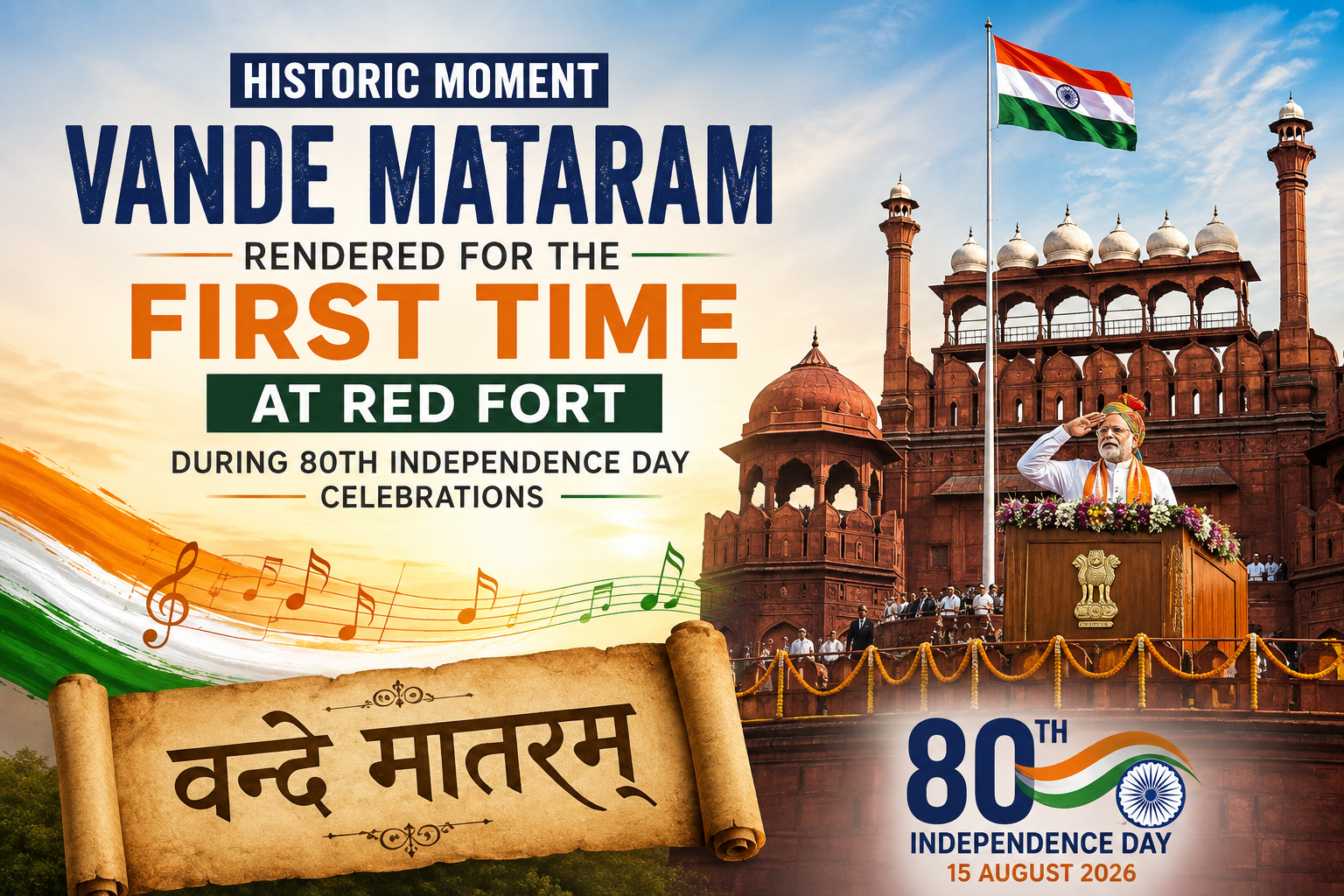
India marked its 80th Independence Day with a historic change in the traditional ceremony at the Red Fort in New Delhi. For the first time, ‘Vande Mataram’ was rendered during the Independence Day celebrations at the iconic monument, adding a strong cultural and historical dimension to the national ceremony.
| Key Facts |
|
• Occasion: 80th Independence Day of India |
The 2026 celebration was particularly significant because it coincides with the 150th anniversary of Vande Mataram, the song that became an important symbol of India’s freedom struggle. The Government has been observing the anniversary through nationwide programmes highlighting the song’s historical and cultural importance.
A Historic Addition to the Red Fort Ceremony
The Red Fort has traditionally been the centre of India’s Independence Day celebrations, with the Prime Minister hoisting the national flag and addressing the nation from its ramparts.
This year, however, the ceremony received a notable addition. Vande Mataram was rendered before the national anthem, making its presence at the Red Fort ceremony a first. The audience was required to stand during the rendition, according to the arrangements announced ahead of the event.
The decision gave special prominence to a song that has been closely associated with India’s nationalist movement for more than a century.
Why Vande Mataram Holds Historical Importance
Written by Bankim Chandra Chattopadhyay, Vande Mataram emerged as one of the powerful cultural expressions of India’s freedom movement. It was used at public gatherings and became a rallying cry during the struggle against colonial rule.
The song’s significance has continued after Independence. It is officially recognised as India’s National Song, while Jana Gana Mana is the National Anthem.
The year 2026 adds another layer to its importance as India commemorates 150 years of Vande Mataram through national-level programmes. The Ministry of Culture describes the song as an enduring expression of the collective spirit associated with India’s freedom struggle.
Independence Day 2026 and Youth
The 80th Independence Day celebrations also placed considerable emphasis on India’s young population. The theme highlighted Yuva Shakti, or youth power, reflecting the importance of young Indians in shaping the country’s future.
Students, young achievers and people contributing to emerging areas were among those receiving attention during the celebrations. The broader message was to connect India’s freedom legacy with the responsibilities and opportunities facing the next generation.
The inclusion of Vande Mataram at the Red Fort can be viewed as more than a ceremonial change. It connects the historical memory of India’s freedom movement with the country’s present-day national celebrations.
The song, which once inspired people during the struggle for independence, was heard at the same historic venue from which India’s Independence Day message is delivered every year.
This combination of historical remembrance, national pride and youth participation gave the 2026 Independence Day ceremony a distinct character.
The 80th Independence Day celebrations at the Red Fort created a memorable moment by bringing Vande Mataram into the heart of the national ceremony for the first time. Its rendition at a site so closely connected with India’s Independence Day traditions served as a reminder of the country’s freedom struggle and the generations that fought for independence.
At the same time, the focus on youth reflects a forward-looking message: the legacy of India’s freedom movement is not only something to remember, but also a responsibility to carry into the future.
| Join Telegram channel | Click Here |